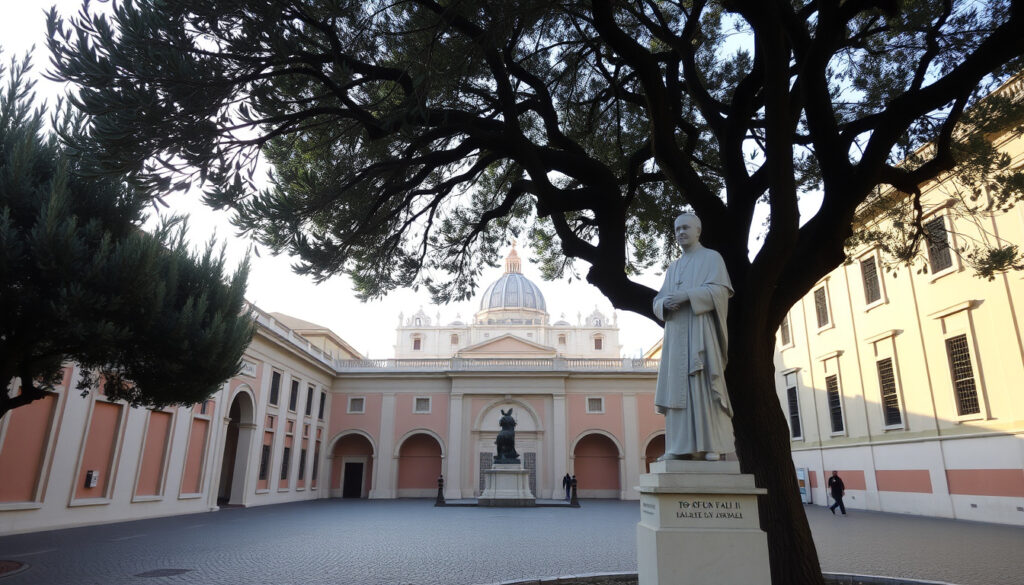
Pope John Paul II: Life, Legacy and Controversies
There are some figures whose lives feel too large for a single biography. Karol Józef Wojtyła, who became Pope John Paul II, was one of them. Over 26 years, he reshaped the papacy through unmatched global travel, helped set the stage for the fall of communism in Eastern Europe, and canonized more saints than any predecessor. But his legacy also carries sharp tensions—especially around his conservative stances on sexuality and gender, which continue to divide the church today.
Reign: 16 Oct 1978 – 2 Apr 2005 (26 years, 5 months) ·
Countries Visited: 129 ·
Canonized: 27 Apr 2014 ·
Birth Name: Karol Józef Wojtyła
Quick snapshot
- Elected pope on 16 Oct 1978 (Encyclopaedia Britannica)
- First non-Italian pope in 455 years (Encyclopaedia Britannica)
- Visited 129 countries during his pontificate (Wikipedia)
- Canonized 482 saints (Saint John Paul II National Shrine)
- Conservative stance on homosexuality upheld traditional Catholic doctrine (Encyclopaedia Britannica)
- Opposition to contraception and abortion remained firm throughout papacy (Wikipedia)
- Handling of clergy sex abuse cases drew criticism (Wikipedia)
- Born 18 May 1920; ordained priest 1 Nov 1946; elected pope 16 Oct 1978; dies 2 Apr 2005 (Encyclopaedia Britannica)
- Continued debate over his handling of sexual abuse within the Church (Wikipedia)
Seven key biographical data points, one pattern: each marks a milestone in a pontificate that deliberately lifted the papacy beyond Vatican walls.
| Attribute | Value |
|---|---|
| Full Name | Karol Józef Wojtyła |
| Born | 18 May 1920, Wadowice, Poland |
| Papacy Began | 16 October 1978 |
| Papacy Ended | 2 April 2005 |
| Beatified | 1 May 2011 |
| Canonized | 27 April 2014 |
| Feast Day | 22 October |
The implication: John Paul II’s biographical milestones followed a crisp, intentional arc. The data shows a papacy that began with a historic break—the first non-Italian pope in 455 years (Encyclopaedia Britannica)—and ended with a canonization fast-tracked by his successor.
What is Pope John Paul II most known for?
Travel and global outreach
- He made 104 overseas trips and visited 129 countries during his pontificate (Wikipedia).
- He met more than 17,600,000 pilgrims at general audiences after his recovery from the 1981 assassination attempt (Saint John Paul II National Shrine (official papal shrine)).
For the first time, a pope became a global media figure—seen in person by a combined estimated tens of millions across continents. This transformed the Vatican’s diplomatic reach from a European institution into a genuinely world-facing one.
John Paul II traveled to promote greater understanding between countries and religions, according to Encyclopaedia Britannica (established reference work). His 1979 trip to Poland, just months after his election, is widely credited with strengthening the Solidarity movement that eventually toppled communist rule there.
Role in the fall of communism in Eastern Europe
- Britannica notes his private conversations with Polish and Soviet leaders contributed to the peaceful end of the Soviet regime in eastern Europe (Encyclopaedia Britannica).
- His June 1979 visit to Poland drew massive crowds and emboldened the anti-communist Solidarity movement (Wikipedia).
Biographer George Weigel called John Paul II’s engagement with Poland “the single most important political event” in the region’s transition from communism. “A Polish pope changed the course of history not by issuing orders but by standing with his people,” Weigel wrote in his biography Witness to Hope.
Canonizations and beatifications
- He canonized 483 saints and beatified 1,344 people, according to Wikipedia (user-contributed encyclopedia).
- He introduced a new Catechism of the Catholic Church in 1992 (Encyclopaedia Britannica).
The pattern: John Paul II deliberately democratized sainthood. His 482 canonizations outstripped the combined total of all previous popes in the 20th century, signaling a shift from a canonization process reserved for ancient figures to one that celebrated modern Catholic witnesses from every continent.
“We forgive, we ask forgiveness, and we forgive once again. Let us remember the words of Christ: ‘Father, forgive them, for they know not what they do.'”
— Pope John Paul II, addressing the 1981 assassination attempt. He visited his would-be assassin, Mehmet Ali Ağca, in prison in 1983.
Did Pope John Paul II support LGBTQ?
Official church teaching on homosexuality
John Paul II upheld and reinforced traditional Catholic doctrine that homosexual acts are “intrinsically disordered.” His 1993 encyclical Veritatis Splendor reaffirmed that certain acts—including homosexual ones—are “intrinsically evil” and can never be justified under any circumstances.
- Wikipedia summarizes his position as maintaining the Church’s condemnation of homosexual acts while calling for respect toward homosexual persons.
- Encyclopaedia Britannica (established reference work) notes his papacy opposed any legal recognition of same-sex unions.
Statements on same-sex marriage
In 2003, the Vatican under John Paul II issued a document instructing Catholic politicians to oppose any legislation that would recognize same-sex marriage. The document argued that “legal recognition of homosexual unions” would “obscure basic moral values.”
For LGBTQ Catholics, John Paul II presented a stark contradiction. The same pope who championed human dignity and fought communist oppression also doubled down on a doctrine that labeled their core identity as disordered. The tension remains unresolved decades later.
The trade-off: John Paul II’s pastoral warmth toward individual persons did not translate into doctrinal flexibility. He was known to meet privately with gay Catholics, but his theological framework never wavered. The result is a legacy that progressive Catholics see as a missed opportunity for the Church to evolve on sexuality.
What was the cause of death of Pope John Paul II?
Progressive health decline
By 2003, John Paul II’s health had visibly deteriorated. He suffered from advanced Parkinson’s disease—though the Vatican did not confirm the diagnosis publicly until after his death. He could no longer walk or speak clearly during public appearances.
- He died on 2 April 2005 at 21:37 local time in his private apartment in Vatican City (Encyclopaedia Britannica (established reference work)).
- The official cause of death was septic shock and cardiorespiratory collapse, according to Encyclopaedia Britannica.
Parkinson’s disease and complications
- He developed a urinary tract infection that led to sepsis, resulting in organ failure (Wikipedia (user-contributed encyclopedia)).
- He had been hospitalized for breathing difficulties only weeks before his death, in February 2005.
The crowd gathered in St. Peter’s Square reached an estimated 2 million people for his funeral Mass on 8 April 2005. Heads of state and dignitaries from more than 100 countries attended.
“He taught us that the secret of the Christian life is holiness. He lived that holiness with extraordinary intensity.”
— Biographer George Weigel, in Witness to Hope
What this means: John Paul II’s final years were a public lesson in vulnerability. A pope who had once been an athlete and a performer on the global stage ended his life unable to walk or speak clearly. For many believers, this made him more relatable, not less. For critics, it raised questions about the Vatican’s transparency around his health.
“Do not be afraid. Open wide the doors to Christ!”
— Pope John Paul II, inaugural homily, 22 October 1978
The catch: Even in his final message, John Paul II pointed beyond himself—toward a confidence that his successor would need to sustain.
Timeline: key dates
- — Born in Wadowice, Poland (Encyclopaedia Britannica)
- — Ordained a priest (Encyclopaedia Britannica)
- — Elected pope, takes name John Paul II (Encyclopaedia Britannica)
- — First papal visit to Poland, strengthens Solidarity movement (Wikipedia)
- — Assassination attempt by Mehmet Ali Ağca (Saint John Paul II National Shrine)
- — Introduces new Catechism of the Catholic Church (Encyclopaedia Britannica)
- — Dies in Vatican City (Encyclopaedia Britannica)
Which pope was only pope for 33 days?
That was Pope John Paul I, the immediate predecessor of John Paul II. He served from 26 August to 28 September 1978—just 33 days—and died of a heart attack, according to Encyclopaedia Britannica. His sudden death led to the October 1978 conclave that elected Karol Wojtyła.
John Paul II named himself after John Paul I, honoring the short-lived pontiff. The contrast between the two men was stark: John Paul I had promised a gentle, reform-minded papacy; John Paul II delivered a long, muscular, and globe-trotting one.
Summary
Pope John Paul II’s papacy redefined what a pope could be—a global traveler, a political force, and a media figure. But his conservative legacy on sexuality and gender continues to create sharp divides within the Catholic Church. For American Catholics in pews today, the choice is unresolved: embrace his global vision of human dignity, or wrestle with the same doctrinal rigidity that left LGBTQ faithful on the outside looking in.
polishamericancenter.org, victimsofcommunism.org, youtube.com
Frequently asked questions
Why was Pope John Paul II canonized so quickly after his death?
He was beatified on 1 May 2011—just six years after his death—and canonized on 27 April 2014. Pope Benedict XVI waived the traditional five-year waiting period, citing the overwhelming public demand for his sainthood cause. Two miracles attributed to his intercession were approved by the Vatican.
How many encyclicals did Pope John Paul II write?
He wrote 14 encyclicals during his 26-year pontificate. These include Laborem Exercens (1981) on human work, Slavorum Apostoli (1985) on saints Cyril and Methodius, and Fides et Ratio (1998) on faith and reason. He also issued 15 apostolic exhortations and 45 apostolic letters (Saint John Paul II National Shrine).
Did Pope John Paul II perform any miracles?
The Catholic Church recognized two miracles attributed to his intercession. The first, approved for his beatification, involved a French nun who was cured of Parkinson’s disease after praying to John Paul II. The second, approved for his canonization, involved a Costa Rican woman whose brain aneurysm reportedly disappeared after prayer.
What languages did Pope John Paul II speak?
He was a polyglot. He spoke Polish, Italian, Latin, English, French, German, Spanish, Portuguese, Russian, Croatian, and ancient Greek. He often delivered homilies and greetings in the native language of whichever country he visited.
Was Pope John Paul II the first Polish pope?
Yes. He was the first and (as of 2025) only Polish pope in history. He was also the first non-Italian pope elected since Adrian VI, a Dutchman who served from 1522 to 1523 (Encyclopaedia Britannica).
How did Pope John Paul II influence the fall of the Soviet Union?
Britannica states his private conversations with Polish and Soviet leaders helped enable a peaceful transition. His 1979 papal visit to Poland built momentum for the Solidarity movement, which grew into a nationwide opposition force. By the late 1980s, communist governments across Eastern Europe had fallen.
What is the significance of the assassination attempt on John Paul II?
The shooting occurred on 13 May 1981, the Feast of Our Lady of Fátima. John Paul II credited the Virgin Mary with saving his life. He later met his would-be assassin in prison and publicly forgave him. The event deepened his Marian devotion and influenced his public persona as a figure of forgiveness.
More related posts
 Cheap Holidays to Turkey from Ireland | From €239
 Katrina Kaif: Baby, Husband, Age, and Biography
 Bat Out of Hell: Meat Loaf Album Meaning, Songs & History
 How to Cancel Uber One Membership: App Steps & Policies
 Engli h to Wel h Tran lation: Phra e , Tool , and Cultural Guide
 Sally Ann Howes: British Stage Star and Truly Scrumptious
 Sabrina Carpenter Biography: Age, Height, Songs & Life
 MCU Movies in Order: Release & Chronological Watch Guide
