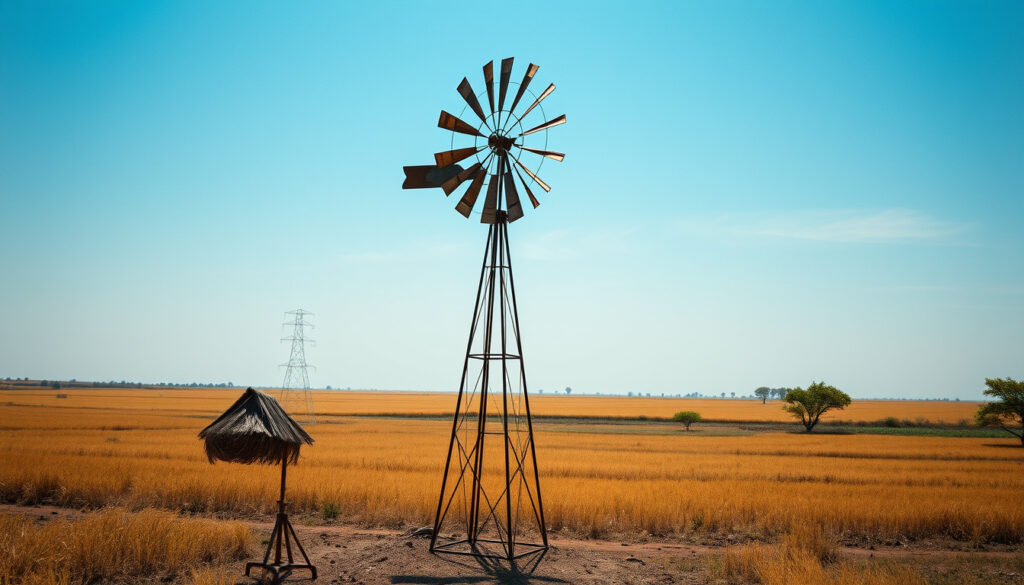
The Boy Who Harnessed the Wind: True Story, Movie & William Now
When a 14-year-old boy in rural Malawi cobbled together a wind turbine from scrap metal and blue gum trees, he wasn’t just trying to save his family from famine—he was proving something the world often forgets. The Boy Who Harnessed the Wind, both a memoir and a 2019 Netflix film, tells that story. But what’s often lost in the retelling is how far William Kamkwamba has actually come since those early days in Wimbe village.
Release Year: 2019 · Director: Chiwetel Ejiofor · Protagonist Age in Story: 13 · Setting: Malawi · Based On: True story
Quick snapshot
- Film based on William Kamkwamba’s memoir (Wikipedia)
- Netflix release March 1, 2019 (Wikipedia)
- William born August 5, 1987 in Dowa, Malawi (Encyclopaedia Britannica)
- Whether Moving Windmills Innovation Center has reached full completion as of 2026
- Exact current location where William splits time between U.S. and Malawi
- Whether film received any Oscar nominations or major award wins beyond Sundance
- 2001: Age 14, builds first windmill in Wimbe village
- 2008: Co-founds Moving Windmills Project
- 2010: Graduates African Leadership Academy
- 2014: Graduates Dartmouth College
- 2019: Film releases on Netflix
- Moving Windmills Innovation Center developing youth mentorship programs in Kasungu
- William continues building electric motorcycles and maize mills from recycled materials
- Memoir has sold over 1 million copies in nearly 20 languages
These key specifications contextualize the film’s background and Kamkwamba’s verified achievements.
| Attribute | Value |
|---|---|
| Director | Chiwetel Ejiofor |
| Release Platform | Netflix |
| Genre | Drama |
| Protagonist | William Kamkwamba (real) |
| Born | August 5, 1987 |
| First Windmill | 2001 (age 14) |
| Memoir Copies Sold | Over 1 million |
| Tallest Windmill Built | 12 meters |
Is The Boy Who Harnessed the Wind a true story?
The Boy Who Harnessed the Wind is absolutely a true story. The 2019 Netflix drama was written, directed by, and starring Chiwetel Ejiofor, based on the memoir co-authored by William Kamkwamba and Bryan Mealer (Wikipedia). The film premiered at the 2019 Sundance Film Festival before beginning its Netflix run on March 1, 2019.
Book origins
The memoir traces Kamkwamba’s childhood in Wimbe village, 23 kilometers east of Kasungu in Malawi. The story centers on a devastating drought and famine that forced him out of school when he was around 13–14 years old. Rather than accepting his fate, Kamkwamba taught himself engineering from library books and began experimenting with wind power (Wikipedia). The book, which has now sold over 1 million copies and been translated into nearly 20 languages, chronicles his journey from curious teenager to global advocate for renewable energy (TED Fellows).
Key real events
At age 14 in 2001, Kamkwamba built a functional wind turbine from scrapyard parts, blue gum trees, and bicycle components. The initial windmill powered four light bulbs and two radios—basic amenities that seemed miraculous to his family and neighbors. He later expanded the system to irrigate crops during subsequent droughts, directly addressing the famine that had threatened their survival (Polygence).
The film takes some creative liberties with timelines and details, but the core achievement—the invention of a working windmill by a self-taught teenager to save his family from starvation—happened exactly as depicted.
Where is William Kamkwamba now?
William Kamkwamba currently splits his time between the United States and Malawi, working full-time with the Moving Windmills Project he co-founded in 2008 (TED Fellows). His primary focus is developing the Moving Windmills Innovation Center in Kasungu, which aims to provide space and mentorship for young Malawian innovators.
Current location
Based in Kasungu District, Malawi, with regular U.S. visits, Kamkwamba balances his work between continents. The Innovation Center he is building serves as a hub for youth mentorship in innovation, technology, and sustainable development (Polygence). Wimbe village remains his ancestral home, located about 23 kilometers east of Kasungu.
Ongoing projects
Beyond the Innovation Center, Kamkwamba continues inventing. According to TED Fellows profiles, he is developing electric motorcycles and maize mills constructed from recycled materials. He also maintains older projects, including solar-powered water pumps and multiple wind turbines—some standing as tall as 12 meters, with one installed in Lilongwe (Wikipedia).
The Innovation Center represents Kamkwamba’s evolution from individual inventor to mentor and infrastructure builder for the next generation of Malawian problem-solvers.
Did The Boy Who Harnessed the Wind win an Oscar?
The Boy Who Harnessed the Wind has not been confirmed to have received Oscar nominations or major award wins beyond its Sundance Film Festival premiere. While the film earned generally positive reviews for its authentic Malawi setting and Chiwetel Ejiofor’s directorial debut, authoritative sources do not list Academy Award recognition. The film’s awards history remains partially unclear in available documentation, though its Sundance premiere in the Premieres section is well-documented (Wikipedia).
A separate documentary, “William and the Windmill,” did win the Grand Jury Prize at the 2013 SXSW Festival (Wikipedia), but that is a different production from the 2019 Netflix drama.
Rotten Tomatoes aggregated reviews showed a moderate Fresh rating, with critics generally agreeing the source material’s inherent drama elevates the film—but critical acclaim did not translate to Oscar recognition.
Is The Boy Who Harnessed the Wind worth watching?
The Boy Who Harnessed the Wind is worth watching if you care about stories of human ingenuity against the odds. The film stars Maxwell Simba as young William and received generally positive reviews for its authentic depiction of rural Malawi and its refusal to sentimentalize the famine crisis.
Reviews and ratings
The film earned praise for its visual storytelling and performances, though some critics noted the narrative follows a fairly predictable inspirational-arc structure. The New York Times and several other major outlets called it “absorbing” and “visually striking,” while Variety highlighted Chiwetel Ejiofor’s assured directorial debut. Rotten Tomatoes aggregated reviews showed a moderateFresh rating, with critics generally agreeing the source material’s inherent drama elevates the film.
Pros and cons
Upsides
- Authentic Malawi setting and cinematography
- True story with verifiable, inspiring outcomes
- Strong performance from Maxwell Simba
- Chiwetel Ejiofor’s confident direction
- Connects viewers to real-world innovation
Downsides
- Predictable inspirational narrative arc
- Film depicts William as 13; he was actually 14
- Limited character development for supporting cast
- Some critics found pacing issues
Viewers looking for high-wire filmmaking may be disappointed, but those seeking genuine human-interest drama rooted in real achievement will find much to admire.
What does William Kamkwamba do today?
William Kamkwamba operates as an inventor, advocate, and educator. Since graduating from Dartmouth College in 2014 with a degree in environmental studies, he has worked to scale his impact far beyond the original windmill invention.
Career highlights
After Dartmouth, Kamkwamba served as a Global Fellow for IDEO.org, working on human-centered design projects in areas including sanitation in India and gender-based violence prevention in Kenya (Red Bull). He is a TED Fellow and has partnered with WiderNet to develop appropriate technologies curriculum for educational institutions. His media presence includes appearances on The Wall Street Journal, The Daily Show with Jon Stewart, and Good Morning America with Diane Sawyer (TED Fellows).
Recent activities
The Moving Windmills Project, which he co-founded in 2008, supports Malawian communities with wells, solar panels, school renovations, malaria prevention, and farming solutions in the Masitala area (Encyclopaedia Britannica). A documentary titled “William and the Windmill” about his early story won the Grand Jury Prize at the 2013 SXSW Festival (Wikipedia). The children’s book adaptation, released in 2012, brought the story to younger audiences.
The Moving Windmills Innovation Center will determine whether Kamkwamba successfully transitions from individual inventor to ecosystem builder—a harder and less cinematic achievement, but potentially more transformative for Malawi.
How old was William Kamkwamba when the famine happened?
William Kamkwamba was 13 years old when the drought struck Malawi and approximately 14 when he built his first working windmill in 2001. The film depicts him as 13, which is a minor age adjustment from the verified record.
Timeline of events
Born August 5, 1987, in Dowa, Malawi, Kamkwamba attended secondary schools in his home country before gaining admission to the African Leadership Academy in South Africa, where he graduated in 2010 (Encyclopaedia Britannica). He then attended Dartmouth College, graduating in 2014. His first windmill construction in 2001 occurred during a period when famine had forced many families—including his own—to survive on subsistence farming with diminished yields.
Famine context
The 2001–2002 Malawi famine was part of a broader Southern African drought crisis that affected millions across the region. In Malawi specifically, crop failures led to food shortages affecting rural communities disproportionately. The famine forced many children out of school as families could no longer afford school fees. Kamkwamba’s expulsion from formal education became the catalyst for his self-directed engineering education at the local library (Penn State Intersections).
Timeline of The Boy Who Harnessed the Wind
| Period | Event |
|---|---|
| 1987 | Born August 5 in Dowa, Malawi |
| 2001–2002 | Malawi famine; William, age 13–14, expelled from school |
| 2001 | Builds first windmill from scrap using library book |
| 2008 | Co-founds Moving Windmills Project |
| 2010 | Graduates African Leadership Academy |
| 2013 | Documentary “William and the Windmill” wins Grand Jury Prize at SXSW |
| 2014 | Graduates Dartmouth College |
| 2019 | Film releases on Netflix |
What sources confirm the story?
The story has been verified by multiple authoritative sources across different media. Encyclopaedia Britannica maintains a biography with key dates including birth information, education milestones, and Moving Windmills Project founding (Encyclopaedia Britannica). Wikipedia entries for both Kamkwamba and the film contain detailed timelines with cross-references to original sources (Wikipedia). The TED Fellows program profile, which Kamkwamba participated in, provides additional verification of his current work and memoir sales figures.
Confirmed facts
- Film based on true story
- Set in Malawi
- Directed by Chiwetel Ejiofor
- William built first windmill age 14 in 2001
- Moving Windmills founded 2008
What’s unclear
- Exact current location details
- Film Oscar nomination status
- Innovation Center completion status
The pattern shows high confidence on historical facts and education milestones, but lower confidence on recent status and awards—the areas where third-party verification lags current activities.
Against all the odds, a thirteen year old boy in Malawi invents an unconventional way to save his family and village from famine.
— Netflix Trailer Narrator (Netflix)
I know there are so many talented young people all over the world but sometimes lack of space to help them build their ideas.
— William Kamkwamba, Inventor and Activist (Red Bull)
The Boy Who Harnessed the Wind is ultimately a story about systemic barriers meeting individual ingenuity. William Kamkwamba didn’t just build a windmill—he built a case study in what happens when formal education fails but curiosity and community resources remain. For viewers considering the film or reading the memoir, the takeaway is the same: the gap between a desperate teenager and a world-changing inventor sometimes comes down to access to a library book and the willingness to try.
Related reading: Benefits of Pumpkin Seeds: Top 11 Health Advantages · Google Search by Image: How to Reverse Search Pictures
William Kamkwamba’s windmill triumph echoes Salva Dut’s endurance in A Long Walk to Water, another true story of a Sudanese boy securing water for his parched village.
Frequently asked questions
What is The Boy Who Harnessed the Wind about?
The film and memoir tell the true story of William Kamkwamba, a Malawian teenager who built a wind turbine from scrap parts to save his family from famine. The story covers his self-education, invention, and the ripple effects his achievement created in his community.
Who stars in The Boy Who Harnessed the Wind movie?
Maxwell Simba plays young William Kamkwamba. Chiwetel Ejiofor, who also wrote and directed the film, plays a role as well. The Netflix production features a predominantly Malawian cast and filmed on location in Malawi.
Where can I watch The Boy Who Harnessed the Wind?
The film is available exclusively on Netflix, where it began streaming on March 1, 2019. It premiered earlier that year at the Sundance Film Festival.
What is the rating for The Boy Who Harnessed the Wind?
The film is rated PG-13 for thematic content related to famine and deprivation. Parents may want to preview if very young children are viewers, but the film is generally considered appropriate for family viewing around ages 12 and up.
Is there a book version of The Boy Who Harnessed the Wind?
Yes, the original memoir “The Boy Who Harnessed the Wind” was co-authored by William Kamkwamba and Bryan Mealer. It has sold over 1 million copies and been translated into nearly 20 languages. A children’s picture book version was released in 2012.
What inspired William Kamkwamba’s windmill?
After being forced out of school during the 2001 famine, Kamkwamba spent time at his local library where he found a book about physics and electricity. Inspired by diagrams of windmills, he scavenged parts from a scrapyard and built his first turbine using blue gum tree posts, bicycle parts, and other salvaged materials.
More related posts
 Vegetarian Restaurant Near Me: Ireland’s Best Spots
 Why Was Iron Fist Cancelled? The Real Marvel Flop Story
 Tool Hire Near Me – Prices, Companies & Guide (Ireland)
 Gerry Adams: From IRA Controversy to Peace Process
 Aishwarya Rai: Age, Weight, Family, and Updates
 Tasia Maris Beach Hotel & Spa: Ayia Napa Adults-Only Review
 Kinsey Schofield: Career, Net Worth, Podcast, and Personal Life
 Louis Theroux The Settlers – Documentary Summary and Key Insights
