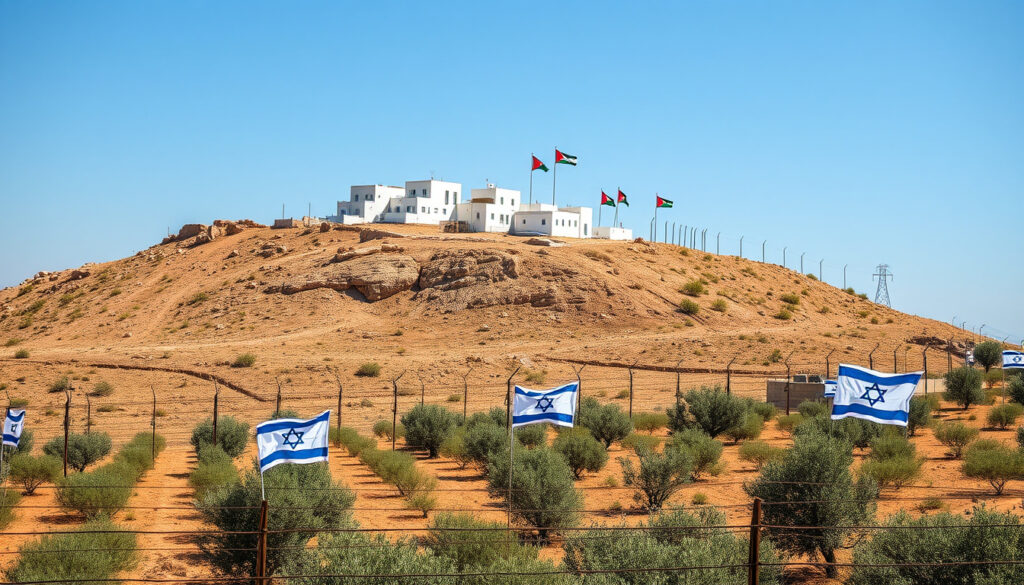
Louis Theroux The Settlers – Documentary Summary and Key Insights
Louis Theroux: The Settlers, a 2025 BBC Two documentary, offers an intimate look at Israeli settlers living in the occupied West Bank. Filmed over three weeks in late 2024, the film marks Theroux’s return to a subject he first explored in his 2011 documentary The Ultra Zionists. This updated work arrives at a particularly fraught moment in the region, with settlement activity accelerating in the aftermath of events following October 7, 2023.
The documentary brings viewers face-to-face with some of the most prominent figures in the settler movement, including Daniella Weiss, widely described as the “godmother of the settlers.” Theroux’s approach, which he describes as “perpetrator-focused,” aims to understand the mindset driving settlement expansion while documenting its tangible effects on Palestinian communities. The film premiered as part of Louis Theroux’s BBC specials and remains available on BBC iPlayer.
What Theroux’s Documentary Reveals About West Bank Settlers
In-depth interviews with Israeli settlers in Hebron and surrounding West Bank territories, examining their motivations, daily lives, and ideological foundations.
Filmed across three weeks in late 2024, premiered in 2025 as a BBC Two special, now available for streaming on BBC iPlayer.
Humanizing controversial figures while maintaining focus on the real-world impact of settlement expansion on Palestinian populations.
Mixed reactions regarding bias and empathy, with particular controversy surrounding post-release events involving interviewed Palestinians.
Core Insights From the Documentary
- Many settlers frame their presence in the West Bank as a divine right, viewing the territory as part of a “greater Israel” promised in religious texts. This conviction drives their commitment to expansion despite international condemnation.
- Daniella Weiss emerged as a central figure, discussing plans to recruit 800 families for resettlement in Gaza and claiming support from Prime Minister Benjamin Netanyahu.
- Settlement activities accelerated significantly following the events of October 7, 2023, with increased military protection for settler operations throughout the West Bank.
- The documentary highlights the stark disparity between settlers, who live under Israeli civil law and can vote in Knesset elections, and Palestinians subject to military rule without voting rights.
- Podcast reviewers noted Theroux’s emphasis on the Israeli Defense Forces’ role in protecting settler communities, framing this as a state-sanctioned element of the settlement enterprise.
- The film includes voices from Palestinian activists like Issa Amro and Mohammad Hureini, who navigate daily life under occupation, including encounters with soldiers at checkpoints.
- One particularly striking moment captured Weiss dismissing the possibility of neighbourly relations with Palestinians, stating that they constitute separate nations with incompatible futures.
| Fact | Details |
|---|---|
| Director/Host | Louis Theroux |
| Focus | Israeli settlers in the West Bank, including Hebron |
| Filming Period | Three weeks in late 2024 |
| Platform | BBC Two, BBC iPlayer |
| Key Interview Subjects | Daniella Weiss, Ari Abramowitz, Malkiel Bar-Hai, Issa Amro, Mohammad Hureini |
| Legal Context Opening | Film opens noting settlements illegal under international law since 1967 |
| Prior Work | Follow-up to 2011’s The Ultra Zionists |
| Theroux’s Approach | “Perpetrator-focused” documentary style |
The film explicitly opens with a statement positioning settlements as illegal under international law since 1967, establishing a legal context that frames the interviews that follow.
The Settlers: Who Theroux Interviewed
Daniella Weiss and the Settlement Leadership
Weiss occupies a unique position in the settler movement, having spent decades advocating for expanded Jewish presence throughout the West Bank. Theroux captured her discussing the displacement of Palestinian communities and articulating plans for further settlement activity. During a filmed exchange on a hilltop overlooking a Palestinian town, Weiss explained her singular focus on “how to bring more people to settle the land.” When questioned about the suffering visible in surrounding communities, the documentary captures her showing minimal concern for the impact of settler violence on Palestinian families.
Weiss also discussed her claims regarding support from Prime Minister Netanyahu, suggesting high-level political connections within the settlement movement’s most influential circles.
Palestinian Voices in the Documentary
The documentary devotes substantial screen time to Palestinian perspectives, particularly through interviews with Issa Amro, a well-known activist based in Hebron. Amro describes navigating the city’s network of IDF checkpoints and restricted areas that govern daily life for residents. Theroux also interviewed Mohammad Hureini from Masafer Yatta, capturing a tense sequence where the crew sheltered with Hureini from Israeli soldiers whose guns and laser sights were visible in the darkness.
In May 2025, following the documentary’s release, Issa Amro reported that his Hebron home was raided and robbed by masked Israeli soldiers and settlers. He shared videos showing settlers entering his property and stated that police instructed him not to report the incident while threatening his arrest. Theroux acknowledged the situation on social media, noting that his team was monitoring developments.
The Legal and Political Context of West Bank Settlements
International Law and Settlement Status
The West Bank has remained under Israeli military occupation since the 1967 Six-Day War, a status that forms the foundation of international legal objections to settlement activity. UN Security Council Resolution 2334, passed in 2016, characterized settlements as a “flagrant violation” of international law. The International Court of Justice has issued multiple opinions affirming the illegality of Israeli presence in occupied territories.
Israel maintains a fundamentally different position, rejecting accusations of apartheid and asserting its right to exist as a Jewish state while managing competing claims to the territory. This disagreement leaves a significant divide between Israeli government policy and the international consensus on settlement activities.
The Two-Tiered Legal System
The documentary highlights what observers describe as a dual legal system operating in the West Bank. Israeli settlers reside in communities governed by Israeli civil law and participate in national elections, casting votes for Knesset representatives. Palestinian residents, by contrast, remain subject to military law, facing restrictions on movement, land use, and political representation that settlers do not experience.
Podcast discussions following the documentary’s release highlighted the settler movement’s documented breaches of international law and the Israeli state’s visible presence through IDF checkpoints and military protection of settler communities.
Theroux’s Documentary Approach: A Comparison
Louis Theroux has described his methodology as “perpetrator-focused,” a style that distinguishes The Settlers from conventional documentary approaches. Rather than beginning with victim testimonies and building toward an indictment, Theroux spends substantial time examining the motivations, rationalizations, and worldview of those perpetrating actions that cause harm to others.
This approach drew particular attention in The Ultra Zionists, his 2011 documentary that first brought him into contact with figures like Daniella Weiss. The 2025 documentary revisits this territory fourteen years later, documenting how the movement has evolved and grown despite sustained international opposition. Reviewers noted that unlike the earlier film, which focused primarily on settler communities themselves, The Settlers incorporates stronger representation of Israeli military presence through soldiers and checkpoints.
My aim was to observe Israeli ultra-nationalist settlers up close, to try to understand their mind-set and their actions, and to get a sense of the impact of their presence on the lives of the millions of Palestinians who live in the region.
— Louis Theroux, BBC
Key Events: From Production to Release
- 2011 — Theroux releases The Ultra Zionists, his first documentary focusing on West Bank settlers, featuring figures who would appear in the later film.
- Late 2024 — Filming takes place over three weeks in the West Bank, with production occurring amid heightened regional tensions following October 2023 events.
- 2025 — The documentary premieres as part of Louis Theroux’s BBC specials, becoming available on BBC iPlayer.
- May 2025 — Issa Amro reports his Hebron home raided and robbed, sharing videos of settlers entering his property. Police allegedly instruct him not to report the incident.
What the Documentary Establishes Versus What Remains Unclear
Established Information
- The documentary was filmed over three weeks in late 2024
- Settlements are considered illegal under international law
- UN Security Council Resolution 2334 (2016) condemned settlement activity
- The West Bank has been under Israeli military occupation since 1967
- Daniella Weiss serves as a prominent figure in the settlement movement
- Theroux previously made a documentary on this subject in 2011
- The film opened with explicit acknowledgment of the legal status of settlements
Information That Remains Unclear
- The full extent of official government support for specific settlement expansion plans
- Precise details regarding the circumstances surrounding post-release incidents involving interviewees
- Whether Theroux’s team faced restrictions during filming beyond those affecting Palestinian residents
- The specific legal outcomes of any complaints filed regarding reported incidents
- Whether additional interviews were conducted but not included in the final cut
The Broader Context: Why This Documentary Matters
The occupied West Bank represents one of the most enduring and intractable elements of the Israel-Palestine conflict. Settlements have expanded consistently over decades, with population growth continuing even as international condemnation mounts. The documentary arrives at a moment when attention to this issue has intensified globally, providing a platform for voices rarely heard in mainstream documentary filmmaking.
Theroux’s choice to return to this subject fourteen years after his initial exploration reflects both the ongoing nature of the situation and his recognition that the dynamics he documented in 2011 have evolved significantly. The inclusion of military checkpoints and IDF presence marks a departure from his earlier work, acknowledging the structural relationship between the settler movement and the Israeli state.
For viewers seeking to understand the human dimensions of this conflict, the documentary offers an unusually direct encounter with individuals holding diametrically opposed views on the territory’s future. The contrast between settlers articulating a vision of divine entitlement and Palestinian activists describing daily harassment at checkpoints provides a visceral sense of the power asymmetry that characterizes life under occupation.
Sources and Key Quotes
The documentary draws upon interviews conducted directly by Theroux and his crew, with additional context provided through appearances by podcast reviewers who have analyzed the film since its release. The Wikipedia entry on Louis Theroux: The Settlers documents the production timeline and key content. Podcast discussions on platforms including YouTube have featured extended analysis of Theroux’s approach and the film’s treatment of settler motivations.
The film portrays settlers breaking international law with military backing, a dynamic that reviewers identified as central to understanding the occupation’s structure.
— Podcast analysis, YouTube
Summary: What Viewers Should Know
Louis Theroux: The Settlers represents a significant addition to the documentary record on the Israel-Palestine conflict, offering viewers an unfiltered encounter with individuals driving settlement expansion in the West Bank. The film succeeds in illuminating the ideological foundations of the settler movement while documenting the concrete effects on Palestinian communities living under military occupation. Theroux’s “perpetrator-focused” methodology may not satisfy viewers seeking a more traditionally advocacy-oriented approach, but it provides access to perspectives rarely captured at such length in mainstream productions. For those interested in understanding the human dynamics underlying one of the world’s most contested territorial disputes, the documentary offers essential viewing.
Those looking to understand the broader implications of this conflict may find it helpful to review related materials on What Does Cis Mean as part of their research into Middle Eastern politics and identity terminology.
When was Louis Theroux: The Settlers filmed?
The documentary was filmed over three weeks in late 2024 in the West Bank.
Where can I watch the documentary?
The film premiered on BBC Two and remains available for streaming on BBC iPlayer.
Who are the main interview subjects?
Key figures include Daniella Weiss, Ari Abramowitz, Malkiel Bar-Hai, Issa Amro, and Mohammad Hureini.
How does this film compare to Theroux’s earlier work?
The Settlers updates his 2011 documentary The Ultra Zionists, made 14 years earlier, and includes stronger focus on IDF presence and checkpoints.
What is Theroux’s documentary approach?
Theroux describes his style as “perpetrator-focused,” aiming to understand settlers’ mindset and the impact of their actions on Palestinians.
Are settlements legal under international law?
No. Settlements are illegal under international law, deemed a “flagrant violation” by UN Security Council Resolution 2334 and the International Court of Justice.
What controversy followed the documentary’s release?
In May 2025, Palestinian activist Issa Amro reported his Hebron home was raided and robbed, sharing videos of settlers entering his property.
What legal status governs the West Bank?
The West Bank has been under Israeli military occupation since the 1967 Six-Day War.
More related posts
 Europa League Final 2026 – Date, Venue, Tickets Guide
 Phases of the Moon: Tonight’s Phase & 8 Types
 Insta360 Ace Pro 2 – Specs Price Comparisons Guide
 Romania National Football Team: Table, Players, Qualifiers 2026
 Moon Knight Season 2: Status, Rumors & Release Date
 White Rose Shopping Centre: Shops, Parking, Map & Guide
 Hasta la Vista Meaning: Literal Translation, Origin & Usage
 Bank Holidays in 2024: Dates for Ireland, UK, US & Pakistan
