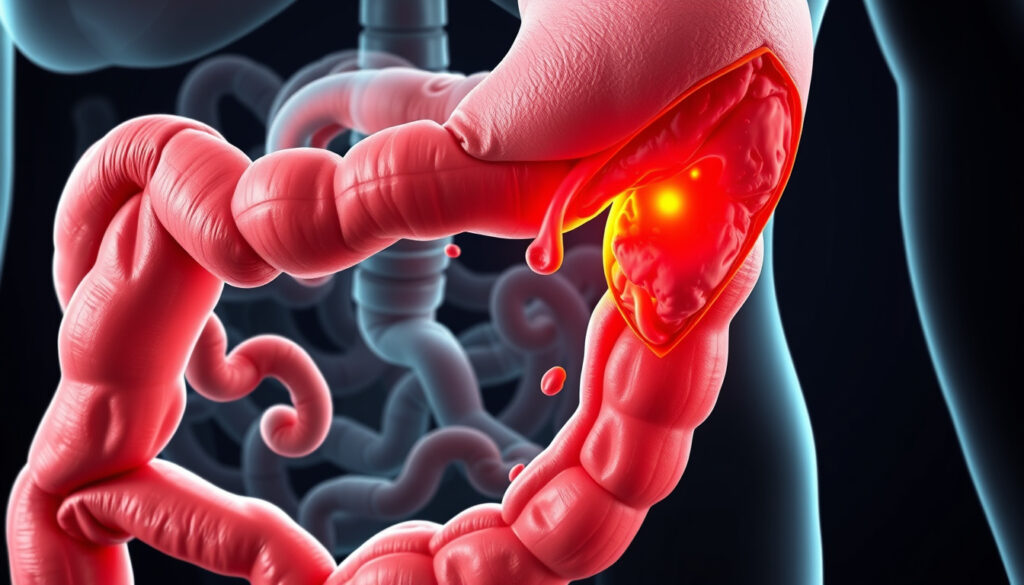
What is Crohn’s Disease? Symptoms, Causes, & Life Expectancy
Few things are as unsettling as persistent stomach trouble that won’t go away. If you’ve been dealing with nagging abdominal pain, unpredictable diarrhea, or unexplained fatigue, you’re not alone—millions of people worldwide live with Crohn’s disease, a chronic inflammatory bowel disease that affects the digestive tract.
Type: Chronic inflammatory bowel disease (IBD) ·
Affected area: Any part of the digestive tract from mouth to anus ·
Common age of diagnosis: Between 15 and 35 years ·
Prevalence (US adults): Approximately 3 million ·
Duration: Lifelong condition with periods of remission and flare-ups
Quick snapshot
- Crohn’s disease is a type of inflammatory bowel disease (American Academy of Family Physicians (primary care guideline))
- It causes chronic inflammation of the digestive tract (Children’s Hospital of Philadelphia (pediatric IBD center))
- There is no known cure, but treatments are effective (Mayo Clinic (gastroenterology department))
- Smoking worsens the disease (Children’s Hospital of Philadelphia)
- Exact cause remains unknown; likely a combination of genetics, immune system, and environment (Children’s Hospital of Philadelphia)
- Why some patients have mild disease while others have severe complications (American Academy of Family Physicians)
- Precise trigger factors vary widely among individuals (Crohn’s & Colitis Foundation (patient advocacy organization))
- Common age of onset: 15–35 years (American Academy of Family Physicians)
- Chronic progressive disease with alternating flare-ups and remission (Children’s Hospital of Philadelphia)
- Early diagnosis and treatment can improve long-term outcomes (Ireland’s Health Service Executive (national health authority))
- Lifelong management with medications and lifestyle changes (Mayo Clinic (treatment guidelines))
- Near-normal life expectancy with proper care (Crohn’s & Colitis Foundation)
- Surgery may be needed for complications like strictures or fistulas (American Academy of Family Physicians)
Five key facts that define Crohn’s disease at a glance:
| Fact | Detail |
|---|---|
| Type | Chronic inflammatory bowel disease (IBD) |
| Affected area | Any part of the digestive tract, most commonly the end of the small intestine and the beginning of the colon |
| Common age of onset | 15–35 years |
| Duration | Lifelong, with periods of remission and active disease |
| Treatment goal | Reduce inflammation, control symptoms, and improve quality of life |
What is the main cause of Crohn’s disease?
The role of genetics
- Family history is a significant risk factor—having a first-degree relative with Crohn’s increases your own risk (Children’s Hospital of Philadelphia).
- Researchers have identified more than 200 gene variants associated with IBD, many linked to immune system regulation (Crohn’s & Colitis Foundation).
Environmental triggers and immune response
- The prevailing model: a genetically susceptible person’s immune system overreacts to normal gut bacteria, triggering chronic inflammation (Mayo Clinic (gastroenterology department)).
- Common triggers include smoking, stress, diet, and certain medications like NSAIDs (American Academy of Family Physicians).
- Crohn’s is more common in developed countries, hinting at environmental factors such as diet and hygiene (Children’s Hospital of Philadelphia).
The pattern: The multifactorial nature of the disease means that targeted prevention remains elusive, and research continues to untangle the contributing factors.
What are the first signs of Crohn’s disease?
Abdominal pain and cramping
- Persistent or cramping pain in the lower right belly is one of the earliest warning signs (American Academy of Family Physicians).
- Pain may be mistaken for appendicitis or irritable bowel syndrome, delaying diagnosis (Mayo Clinic).
Persistent diarrhea and fatigue
- Chronic or frequent diarrhea that doesn’t respond to over-the-counter remedies is a hallmark early symptom (Children’s Hospital of Philadelphia).
- Unexplained fatigue often accompanies gut symptoms and can be debilitating (American Academy of Family Physicians).
- In children, poor height and weight gain may appear before digestive symptoms (Children’s Hospital of Philadelphia).
Because early symptoms are vague, the average time from first symptoms to diagnosis can stretch to months or even years. The pattern: someone with persistent abdominal pain and diarrhea deserves a thorough workup, not just a label of “IBS.”
The implication: Early recognition and referral to a gastroenterologist can shorten the diagnostic delay and improve outcomes.
What are 5 symptoms of Crohn’s disease?
Digestive symptoms
- Diarrhea – frequent, urgent, and sometimes bloody (Children’s Hospital of Philadelphia).
- Abdominal pain – cramping or steady pain, often in the lower right quadrant (American Academy of Family Physicians).
- Blood in the stool – red or dark blood signals active inflammation (Mayo Clinic).
Systemic symptoms
- Unexplained weight loss – reduced appetite and malabsorption lead to dropping pounds (American Academy of Family Physicians).
- Fatigue – persistent tiredness even after rest, often linked to inflammation and anemia (Children’s Hospital of Philadelphia).
- Fever and joint pain can also occur as extraintestinal manifestations (Crohn’s & Colitis Foundation).
The severity and combination of symptoms differ from person to person. One patient may have only mild diarrhea; another may face urgent hospital stays. That variability makes a one-size-fits-all symptom checklist unreliable—clinical evaluation is essential.
The catch: Because the presentation is so variable, a thorough medical history and diagnostic testing are necessary to confirm Crohn’s and rule out other conditions.
What happens if you have Crohn’s?
Short-term complications
- Inflammation can lead to strictures (narrowing of the intestine), fistulas (abnormal connections between organs), and abscesses (American Academy of Family Physicians).
- Severe flare-ups may require hospitalization for IV fluids, steroids, or surgery (Mayo Clinic (treatment guidelines)).
Long-term outlook and management
- With appropriate treatment, life expectancy approaches that of the general population (Crohn’s & Colitis Foundation).
- However, long-standing inflammation raises the risk of colorectal cancer; regular colonoscopies are recommended (Ireland’s Health Service Executive).
- Management includes medications (aminosalicylates, corticosteroids, immunomodulators, and biologics), dietary adjustments, and sometimes surgery (American Academy of Family Physicians).
Crohn’s is a lifelong condition, but it does not have to define your life. The majority of patients achieve remission with modern therapies. The trade-off: ongoing surveillance and occasional treatment changes.
The upshot: With consistent care, most people with Crohn’s can maintain a high quality of life and near-normal life expectancy.
What foods should I avoid with Crohn’s?
Foods that commonly trigger symptoms
- High-fiber foods (nuts, seeds, popcorn, raw vegetables) can irritate the inflamed gut (Crohn’s & Colitis Foundation (diet guidance)). Some patients find that certain seeds, like pumpkin seeds, may be tolerated in remission but should be approached cautiously.
- Spicy foods, dairy (if lactose intolerant), alcohol, and caffeine are frequent culprits (Mayo Clinic (FAQ on diet)).
- Fatty or fried foods may worsen diarrhea and cramping (Children’s Hospital of Philadelphia).
Dietary strategies during flare-ups
- A low-residue diet (low fiber) can reduce bowel movements and ease symptoms (American Academy of Family Physicians).
- Keeping a food diary helps identify personal trigger foods (Crohn’s & Colitis Foundation).
- Some patients benefit from small, frequent meals and adequate hydration (Ireland’s Health Service Executive).
No single “Crohn’s diet” works for everyone. The pattern is clear: avoid known irritants during flares, and gradually reintroduce foods during remission. A registered dietitian familiar with IBD can help tailor a plan.
The pattern: Dietary management is highly individualized; what works for one patient may trigger another, so professional guidance is key.
Confirmed facts
- Crohn’s disease is a type of inflammatory bowel disease (American Academy of Family Physicians)
- It causes chronic inflammation of the digestive tract (Children’s Hospital of Philadelphia)
- There is no known cure, but treatments can induce remission (Mayo Clinic)
- Smoking worsens disease progression (Children’s Hospital of Philadelphia)
What’s unclear
- Exact cause remains unknown; likely multifactorial (Children’s Hospital of Philadelphia)
- Why severity varies so widely between patients (American Academy of Family Physicians)
- Why specific triggers differ from person to person (Crohn’s & Colitis Foundation)
“Crohn’s disease is a chronic inflammatory condition that can affect any part of the gastrointestinal tract. While we can’t cure it, we have powerful tools to manage it—and most people can live full, active lives.”
— Dr. Amy K. Patel, gastroenterologist at Mayo Clinic (Mayo Clinic)
“The goal of treatment is to reduce inflammation, control symptoms, and improve quality of life—achieving remission is realistic for the majority of patients.”
— Crohn’s & Colitis Foundation (Crohn’s & Colitis Foundation)
“Early diagnosis makes a real difference. If you have persistent diarrhea, abdominal pain, or unintended weight loss, don’t wait—see a doctor.”
— Ireland’s Health Service Executive (HSE)
Crohn’s disease is a lifelong inflammatory bowel condition that requires active management but does not have to dictate your future. For patients and their families, the choice is clear: work closely with a gastroenterologist, stay on top of medications and dietary adjustments, and accept that remission is an achievable goal—not a distant hope. The risk of ignoring persistent gut symptoms is far greater than the effort of seeking a proper diagnosis.
wacogastro.com, my.clevelandclinic.org, youtube.com, niddk.nih.gov, gastroenterologyadvisor.com
For those newly diagnosed, understanding the underlying inflammation is crucial, and you can Learn more about Crohns disease to get a comprehensive overview of symptoms and management options.
Frequently asked questions
Can Crohn’s disease be cured?
No, there is currently no cure. However, treatments can induce and maintain remission, allowing most people to live active lives (Crohn’s & Colitis Foundation).
Is Crohn’s disease hereditary?
Family history increases risk, but it is not directly inherited in a simple pattern. About 10–20% of people with Crohn’s have a first-degree relative with IBD (Children’s Hospital of Philadelphia).
How is Crohn’s disease diagnosed?
Diagnosis involves a combination of colonoscopy with biopsies, imaging (CT, MRI), and lab tests. No single test is definitive (American Academy of Family Physicians).
What medications are commonly used for Crohn’s?
Common classes include aminosalicylates, corticosteroids, immunomodulators, and biologics. Choice depends on disease severity and location (Mayo Clinic).
What is the difference between Crohn’s and ulcerative colitis?
Both are IBD, but Crohn’s can affect any part of the digestive tract and involves the entire bowel wall, while ulcerative colitis is limited to the colon and affects only the inner lining (Crohn’s & Colitis Foundation).
Is surgery ever necessary for Crohn’s?
Yes, when medication fails, or complications like strictures, fistulas, or abscesses develop. Surgery is not a cure but can improve quality of life (American Academy of Family Physicians).
Can Crohn’s disease affect other parts of the body?
Yes. Extraintestinal manifestations include joint pain (arthritis), skin rashes, eye inflammation (uveitis), and mouth sores (Children’s Hospital of Philadelphia). For eye health, recent recalls of eye care products highlight the need for safe products, especially for those with inflammatory conditions.
Does stress cause Crohn’s disease?
Stress does not cause Crohn’s, but it can trigger or worsen flare-ups in people who already have the condition (Mayo Clinic).
More related posts
 Alexia Putellas: Relationship, Salary, & Why She’s Leaving
 Rebecca Loos: Affair Allegations and 2025 Update
 Someone You Loved Lyrics: Meaning, True Story & Tourettes
 Bank Holidays in 2024: Complete List for Ireland and UK
 Nike Blazers: Complete History, Styles & Buying Guide
 How Long Do Spider Live? Life pan by Specie & Environment
 What Is a Corn on Your Foot – Causes, Symptoms, Treatment
 Patrick Wilson: Biography, Wife, Children, and Career Facts
